Crafted to Be Heard. Designed to Be Admired.
The Concerto is the purest expression of Charney’s tractrix horn approach: a reference-level system built around coherence, efficiency, and tonal integrity. At its core is a fully realized tractrix expansion, paired with a wideband driver chosen for its ability to resolve without fragmentation or crossover artifacts.
The result is not a sound that calls attention to itself, but one that organizes space, tone, and timing into a single, continuous event. Images emerge with precision and scale, dynamics arrive without strain, and the system remains composed across a wide range of rooms and listening levels.
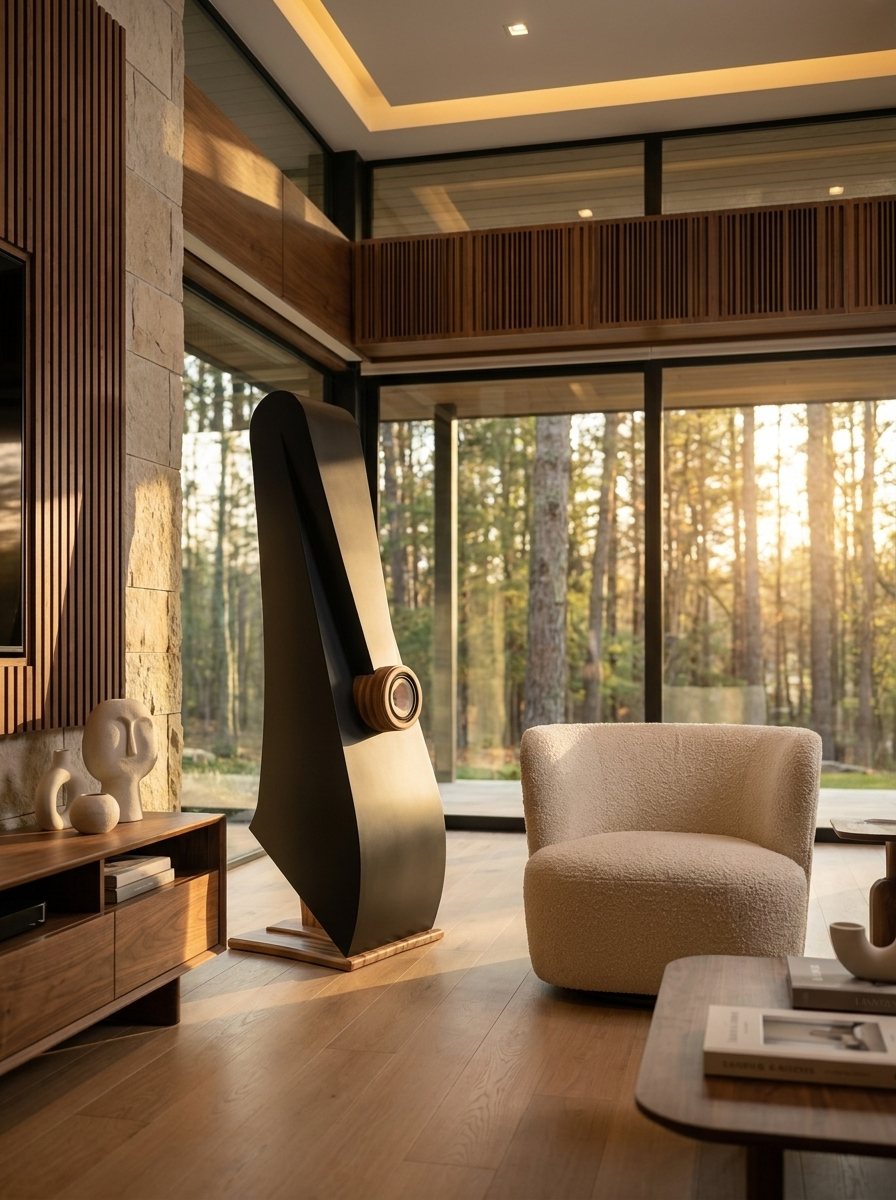
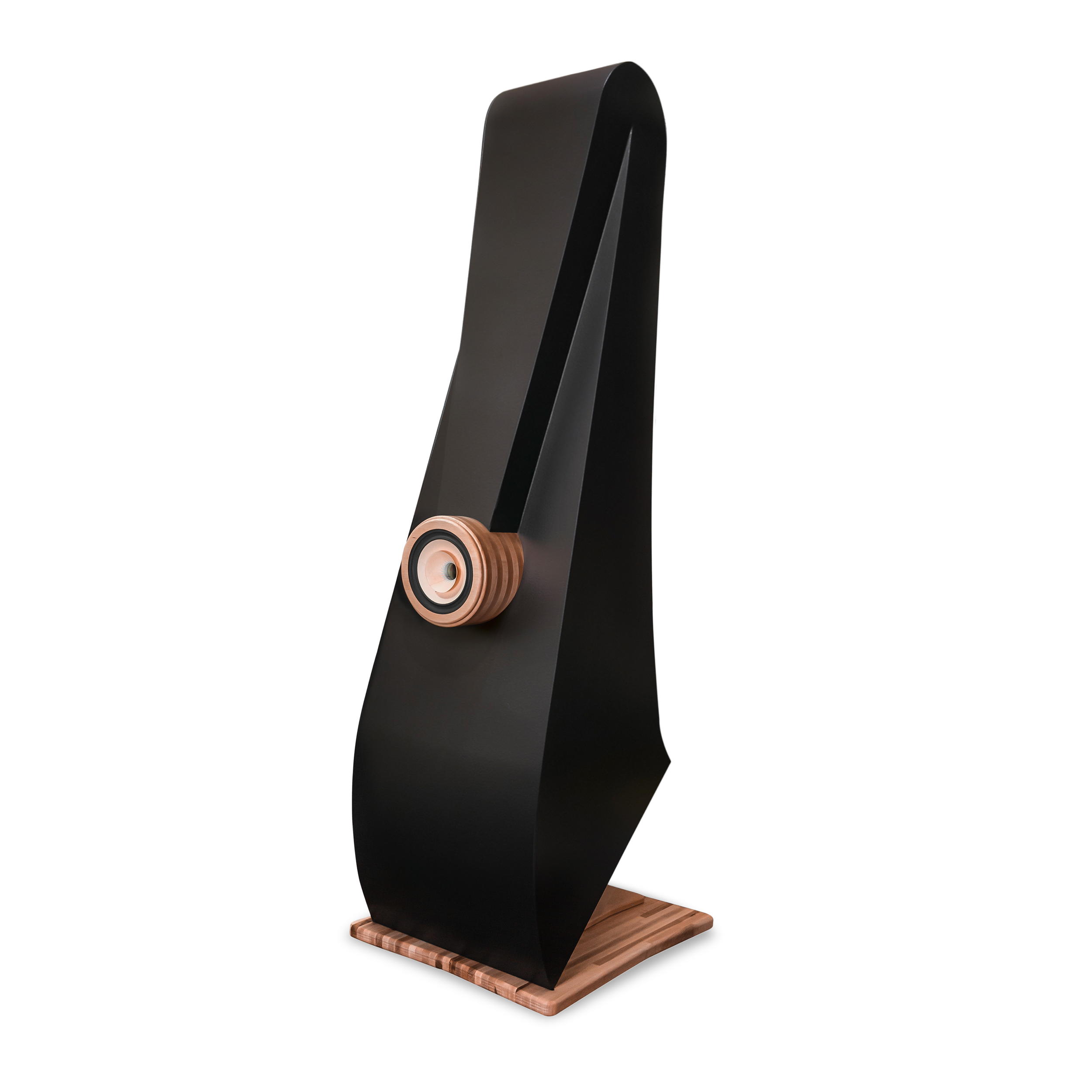
The Concerto
The Concerto stands as the reference platform of the Charney Audio horn philosophy. It represents the point where the tractrix horn geometry reaches the scale required to realize the full acoustic bandwidth and dynamic authority of the design. Before the development of the Lumaca statement system, the Concerto defined the upper boundary of what Charney’s single-driver horn architecture could achieve. At this scale, the principles that guide the Charney approach reveal themselves completely: coherence, dynamic freedom, and full-range authority converge into a unified acoustic instrument capable of reproducing the entire musical spectrum with startling realism.
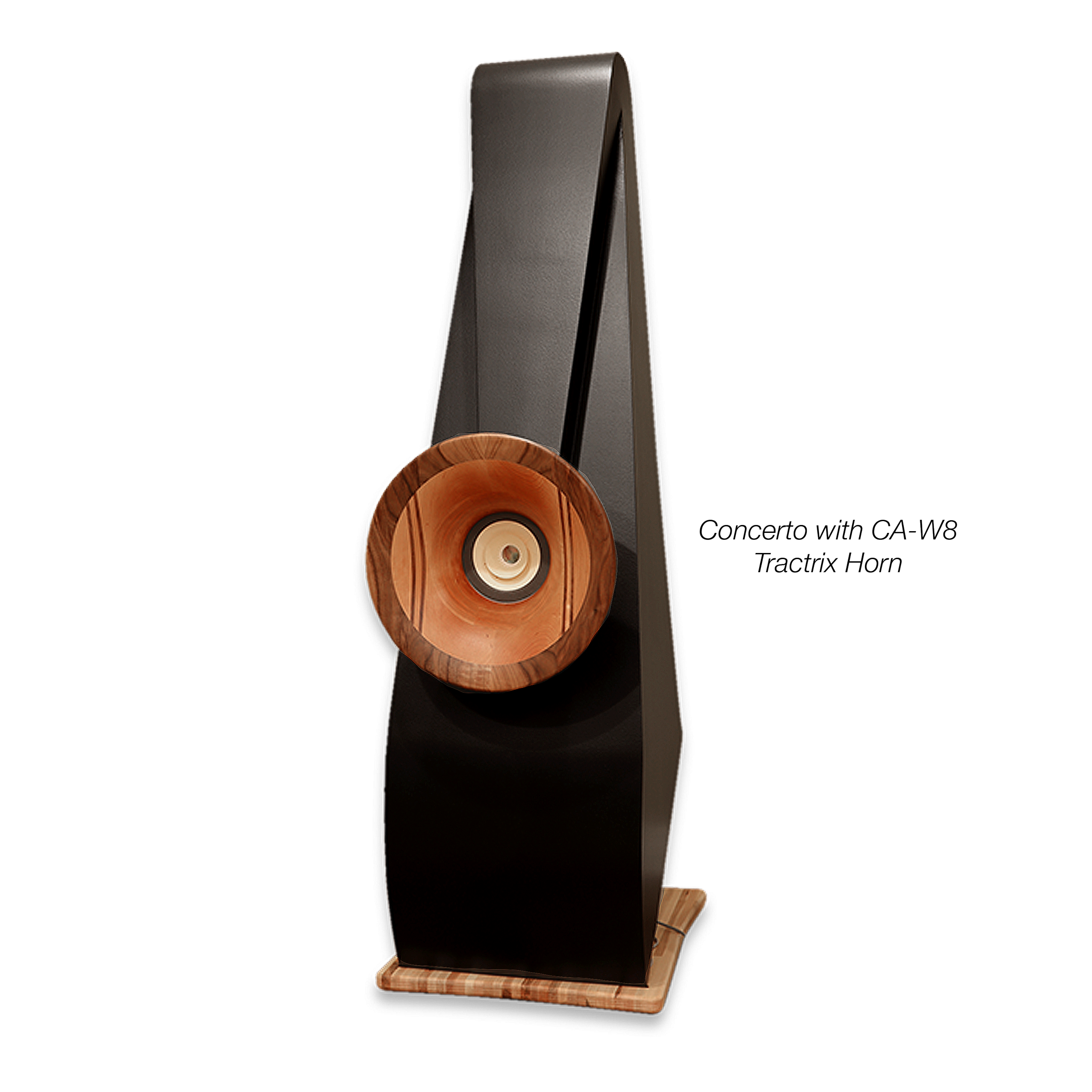
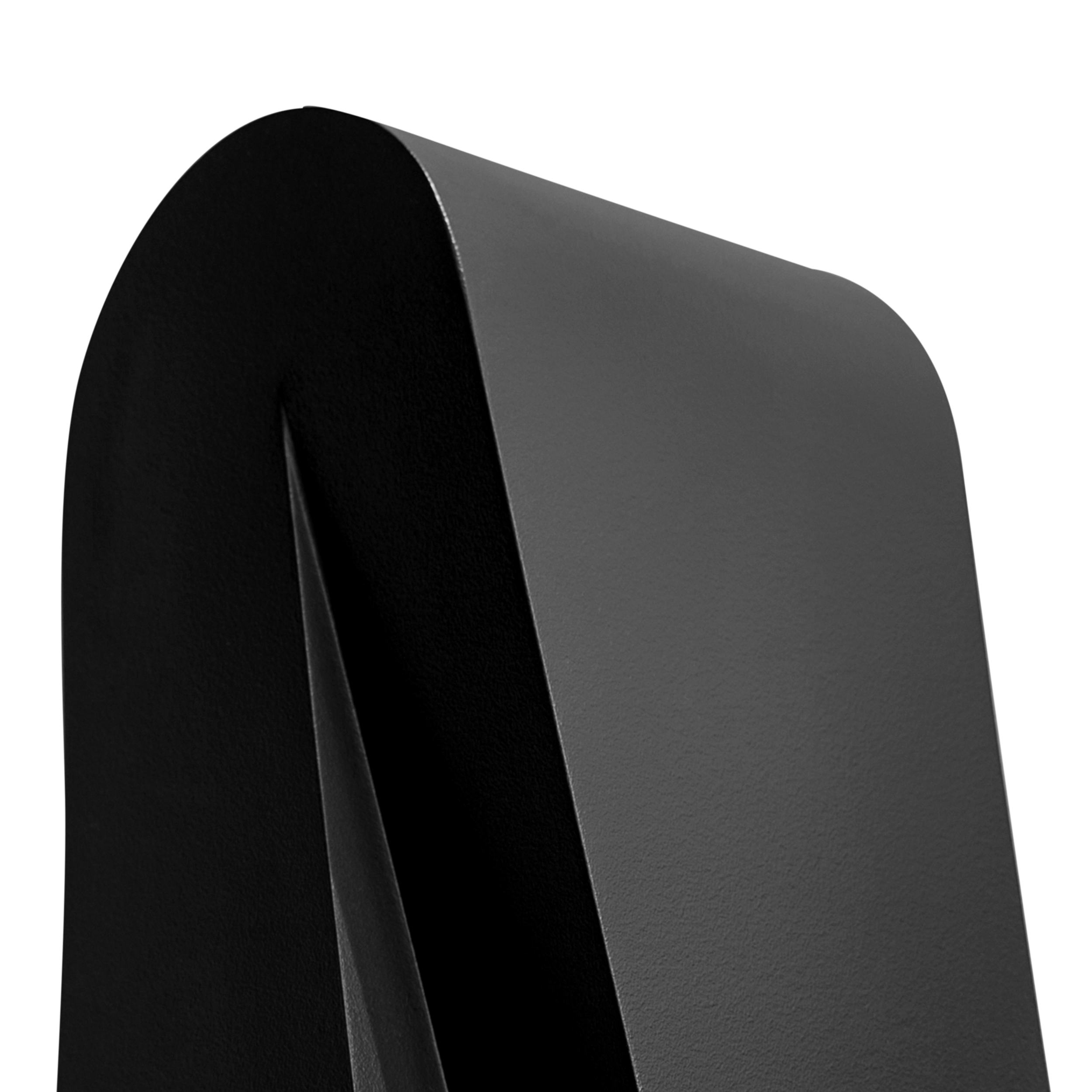
The Concerto represents the first point in the Charney lineup where the tractrix horn geometry reaches the scale required for true reference-level performance. Unlike conventional loudspeaker systems, where drivers are mounted into enclosures and forced to compensate for acoustic inefficiency through excursion and amplifier power, the Concerto begins with the physics of sound propagation itself. The sculptural form of the cabinet emerges directly from the mathematical expansion of the horn. What appears at first glance to be an avant-garde object or modern sculpture is in fact the visible trace of the acoustic geometry that governs how sound moves through air.
This geometry does more than create a distinctive form; it allows the loudspeaker to operate according to the natural behavior of sound itself. Conventional loudspeakers rely on brute-force excursion, asking the amplifier and driver to accelerate a mass of air from rest every time a transient occurs. Energy must be generated through force before the sound can fully emerge. In a properly developed tractrix horn, the situation is entirely different. The driver is coupled to a long, expanding column of air that is already acoustically loaded. When the signal arrives, the horn allows that energy to release immediately into the room rather than forcing the system to build it through excursion. The result is a startling sense of immediacy, where transients emerge fully formed and musical events appear with explosive dynamic clarity.
Because the Concerto’s horn path extends to an extraordinary 120 inches, that same acoustic coupling remains effective across the full musical spectrum. The system is capable of supporting bass into the lowest octave of music while maintaining the coherence of a single radiating source. Instead of behaving as detached pressure or indistinct rumble, the bass possesses form, structure, and location within the soundstage. Low frequencies participate in the spatial image of the music, reinforcing the illusion that instruments occupy real physical positions within the acoustic environment.
With the entire frequency spectrum emerging from a single wideband driver operating within a fully developed horn, the presentation retains an extraordinary level of coherence. Voices, instruments, and the surrounding acoustic space remain inseparable. The performer becomes the origin of the soundfield, and the recorded environment expands naturally outward from that point. Rather than hearing a voice and a room as separate layers, the listener experiences a unified acoustic event in which the performer interacts organically with the surrounding space.
When these qualities converge across the full musical bandwidth, the listening experience changes dramatically. The Concerto projects music into the room with an ease and authority rarely encountered in domestic audio. Quiet passages remain suspended and delicate, while powerful musical moments expand with explosive dynamic contrast. Instruments occupy tangible space, and the soundstage grows beyond the boundaries of the loudspeakers themselves.
Despite its dramatic vertical presence, the Concerto occupies a surprisingly modest footprint. The cabinet rises like a sculptural column, allowing the horn geometry to unfold fully while maintaining a floor space not dramatically larger than many conventional loudspeakers. Encountered in person, the design often produces a moment of astonishment. It appears less like a piece of audio equipment and more like a physical expression of sound itself.
For many listeners, the Concerto represents the point where the Charney philosophy becomes unmistakable. When acoustic geometry, single-driver coherence, and horn efficiency converge at this scale, the loudspeaker ceases to behave like a mechanical device reproducing sound. Instead, it becomes a conduit through which the recorded performance emerges into the room with startling realism and emotional impact.
Driver Options
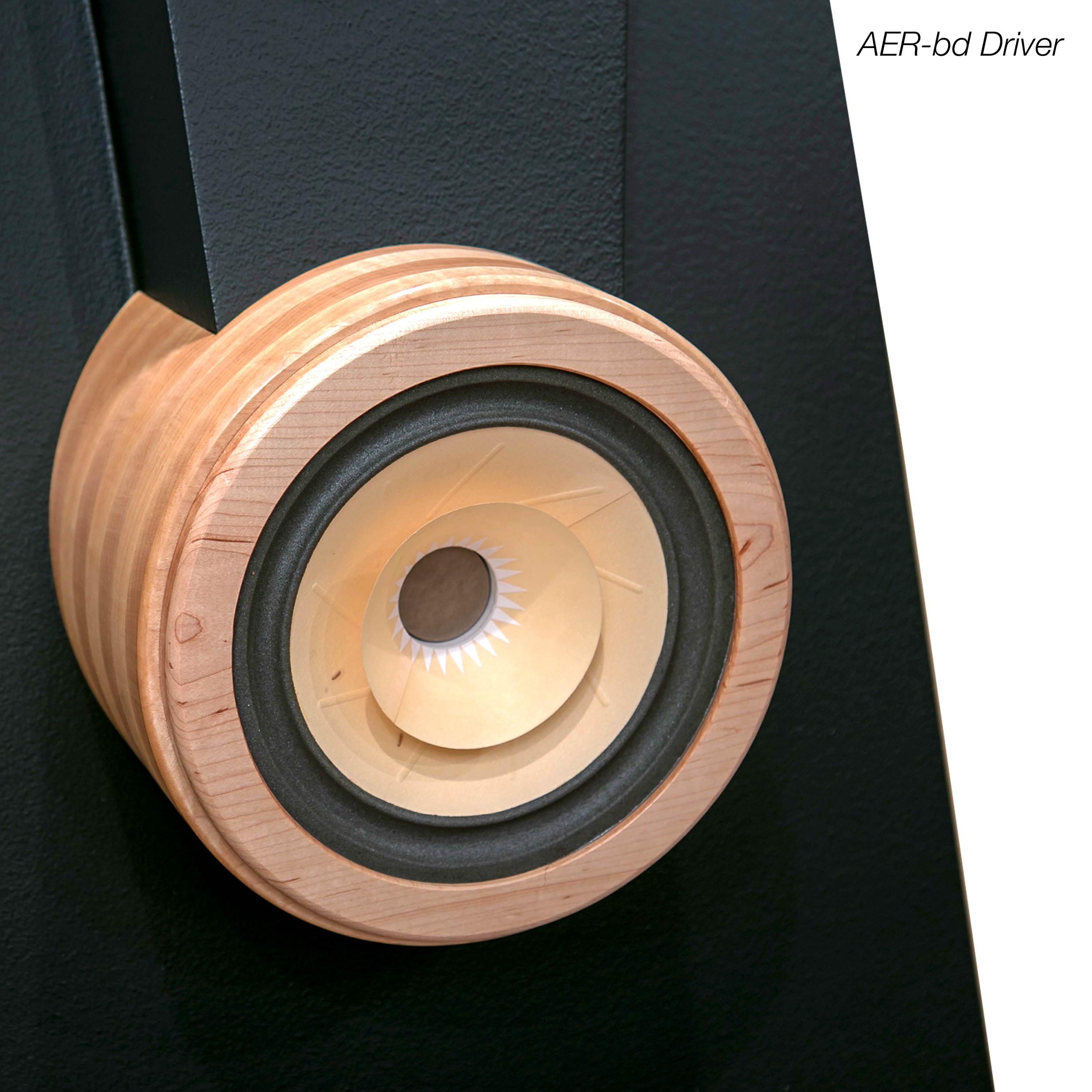
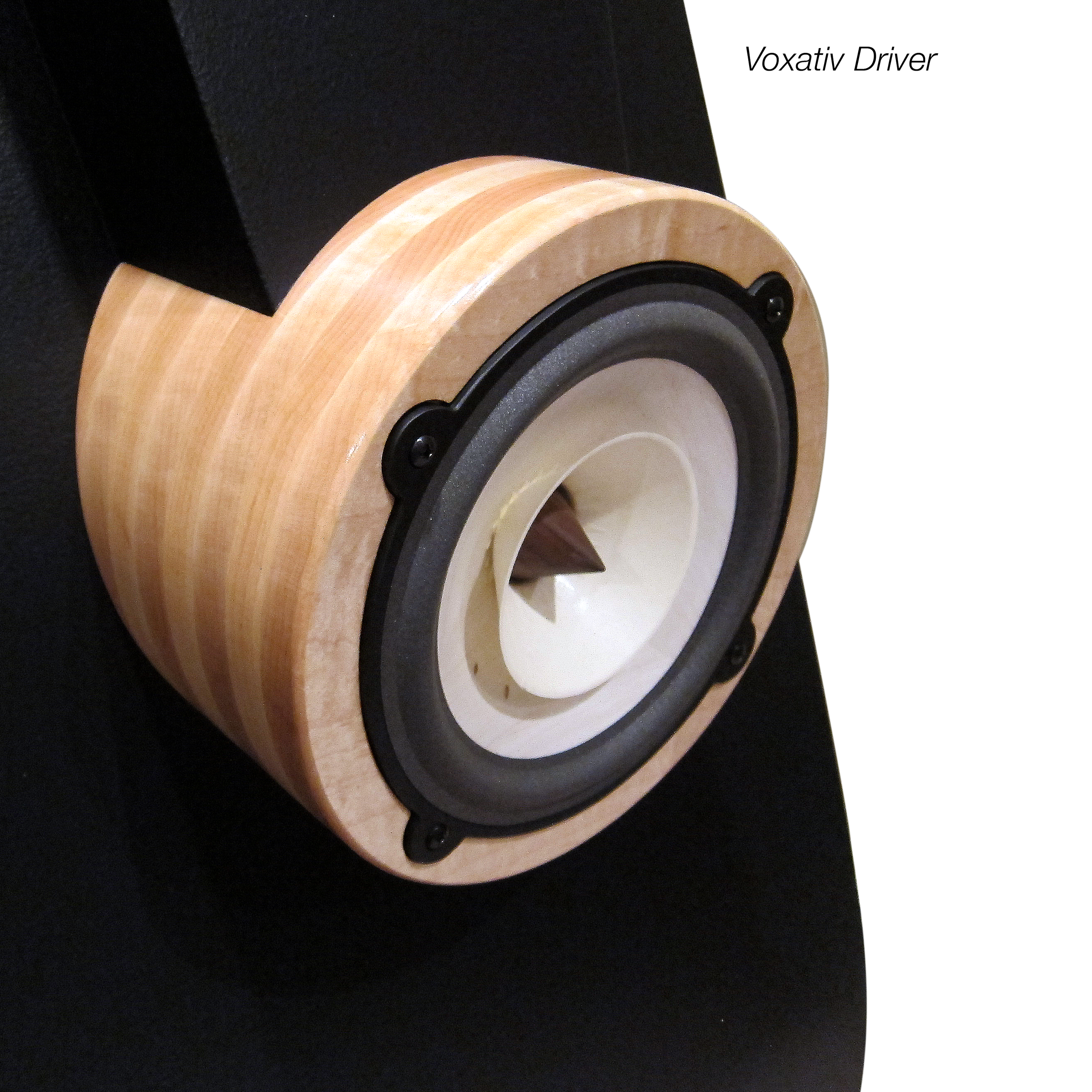
Like the rest of the Charney lineup, the Concerto is designed to accommodate a range of 8-inch wideband drivers. Voxativ and AER are both recommended and commonly selected, though the design allows flexibility based on listener preference. A curated list of recommended drivers, including tonal descriptions and sourcing information, is available to help guide driver selection.
Dimensions: 83”H x 25” W x 36” D
Weight: 50 lbs. each
22kHz-20Hz
105db @ 8 Ohms
Available in a wide range of custom veneers
Veneer with AC 1.6 Drivers $27,500
Veneer with AC 2.6 Drivers $30,500
Veneer with AER bd-3 Drivers $35,500