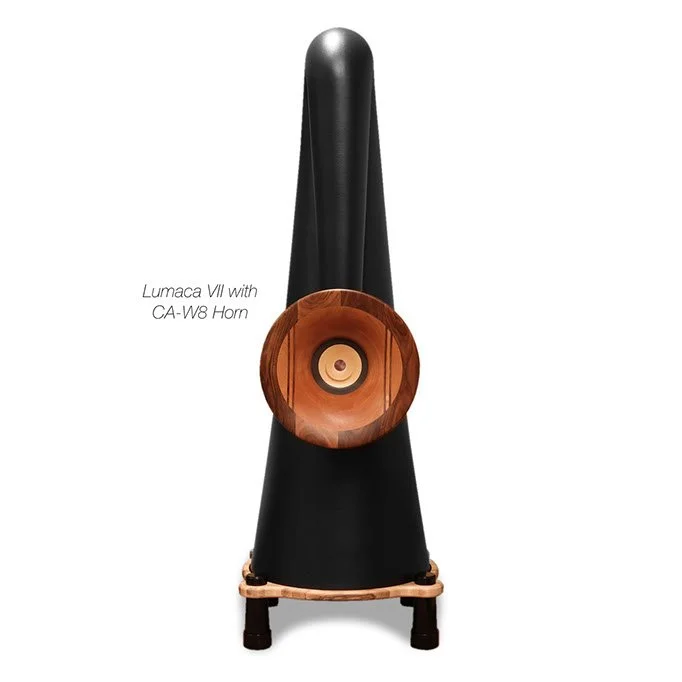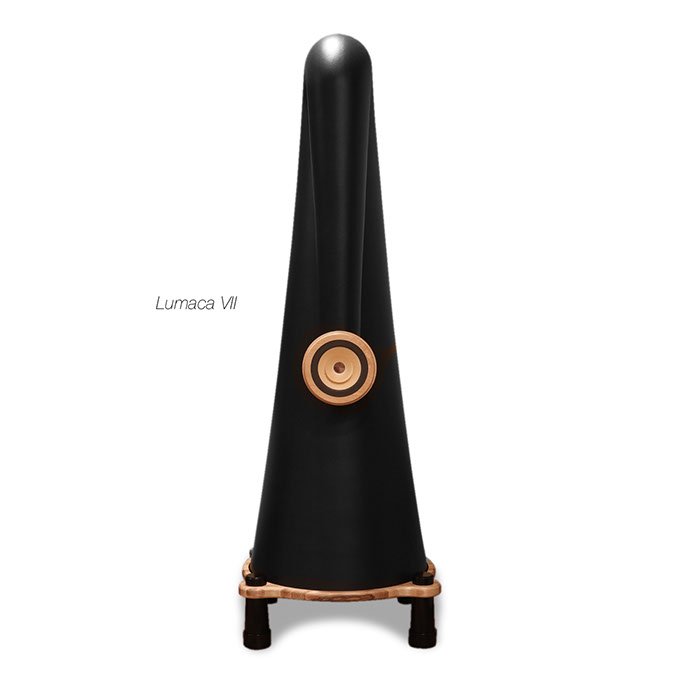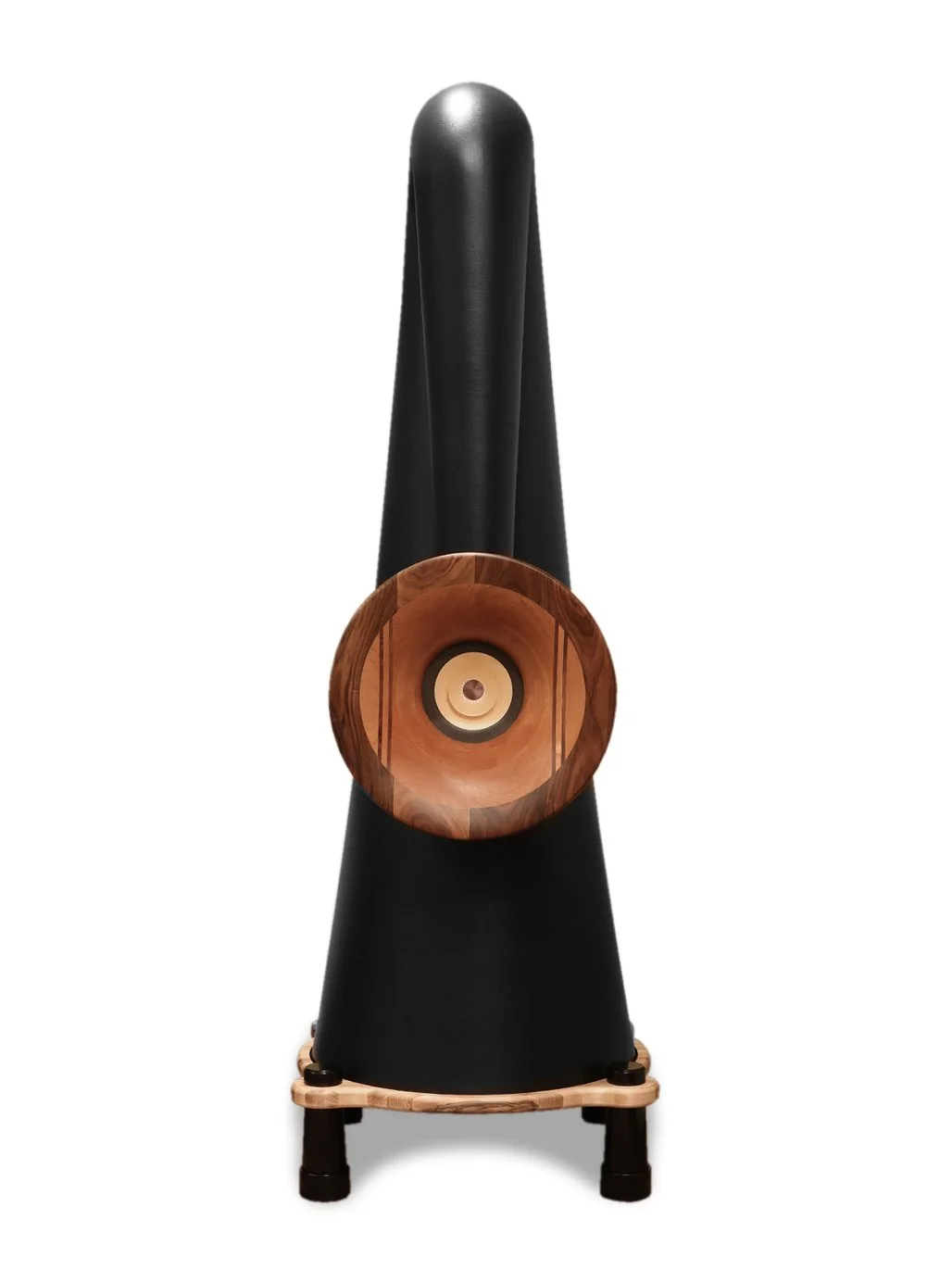
Dimensions: 84’’H x 26” W x 26” D
Weight: 65 lbs. each
22kHz-20Hz
107db @ 8 Ohms
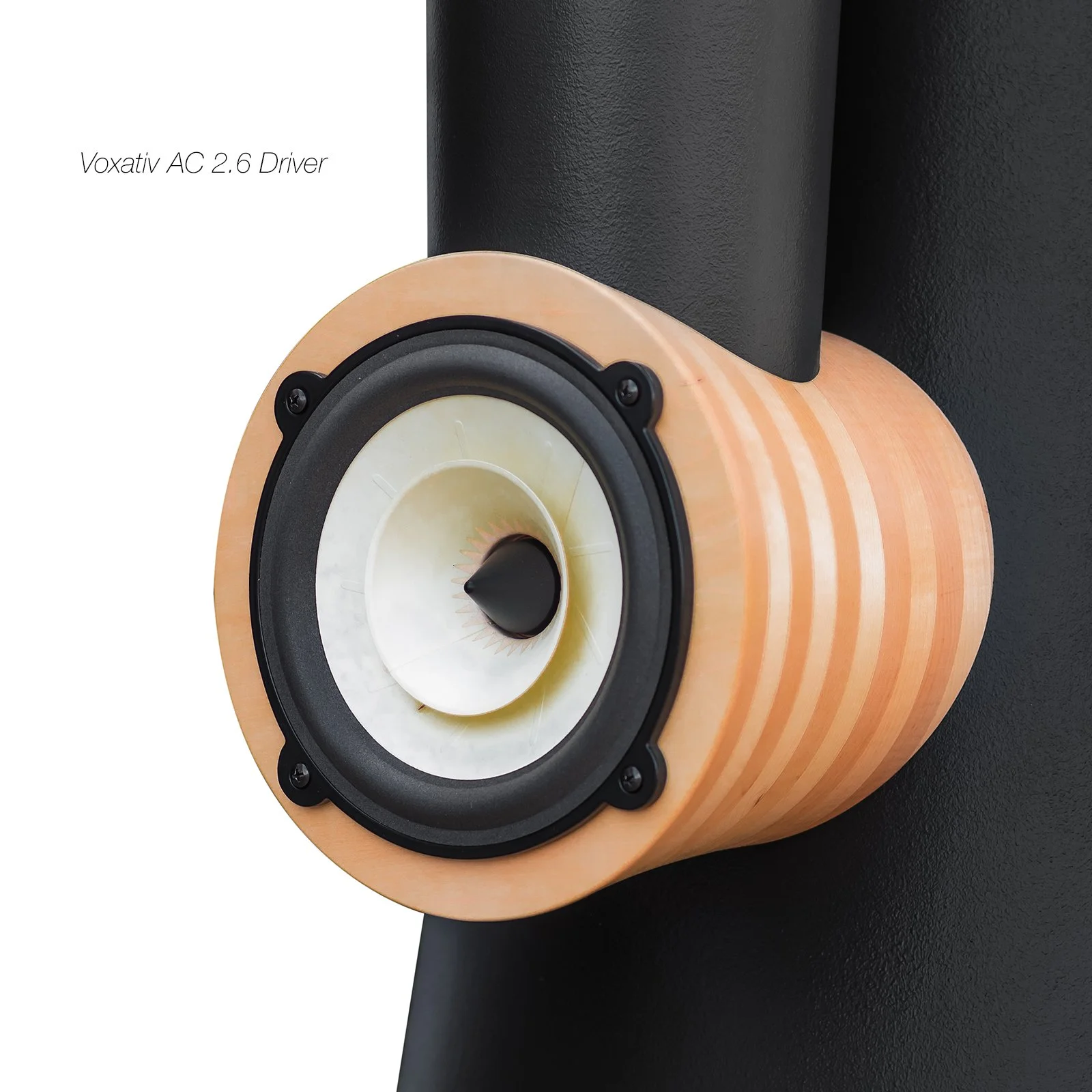
With Voxativ AC 2.6 Drivers $80,000
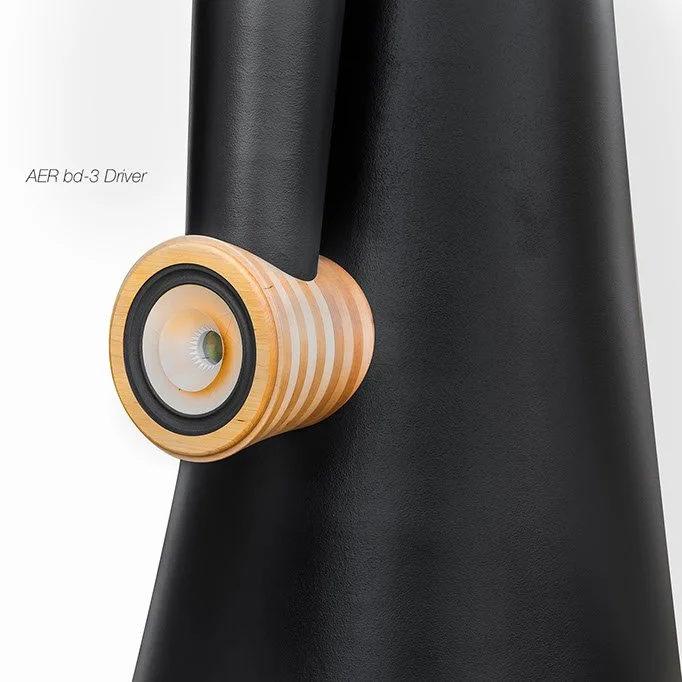
With AER bd-3b Drivers $85,000
Specifications
The Lumaca VII
Lumaca is the statement realization of the Charney Audio horn architecture, carrying the tractrix geometry to its full physical expression. It is the point at which the design is no longer constrained by scale, allowing the system to resolve completely as an acoustic structure.
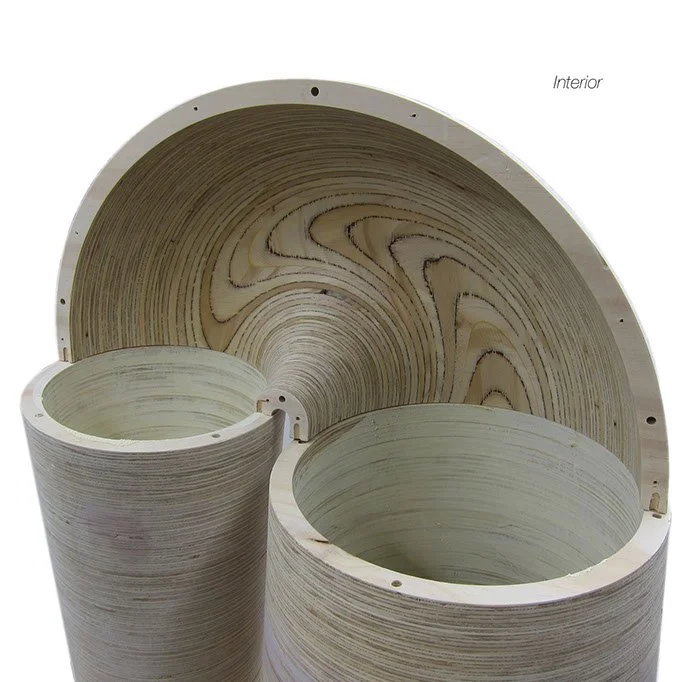
Lumaca is the physical embodiment of true tractrix geometry, realized with a level of precision that preserves the tractrix expansion itself to within thousandths of an inch throughout the entire structure. The cabinet does not merely follow tractrix geometry— It is tractrix geometry brought into physical form.
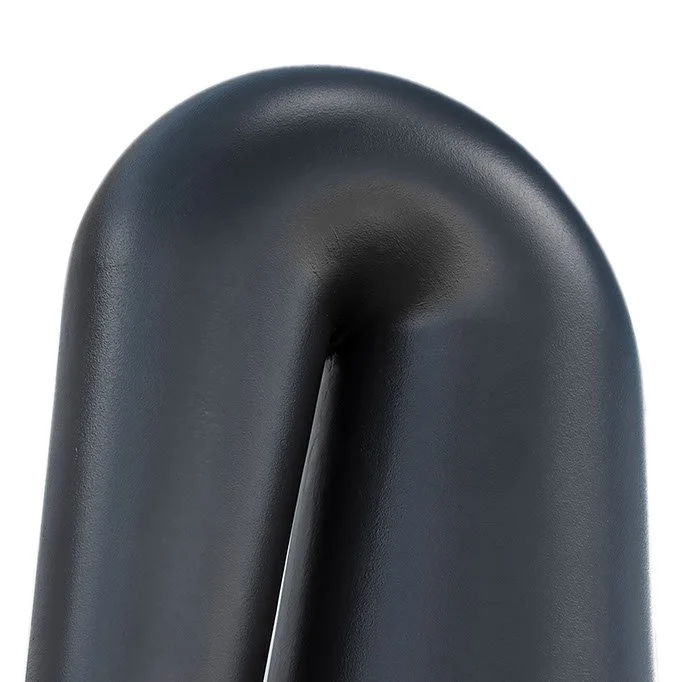
The tractrix expansion is carried through as a continuous surface, without corners or flat interruptions along the path of the wavefront. This continuity is essential to how the system behaves. When the expansion remains unbroken, energy is allowed to propagate without redirection or disturbance, and the waveform develops as a single, coherent structure. The enclosure itself remains mechanically quiet under load, preventing stored energy or delayed release from influencing the result.
Tractrix geometry defines how sound expands into air. Its form governs the rate of sonic expansion and how energy is released into the room, allowing the waveform to develop evenly as it moves outward. When this expansion is preserved, the result is a presentation that remains coherent, continuous, and spatially unified, free to develop without interruption or localized exaggeration.
At full scale, the Lumaca reveals a presentation that is both expansive and grounded. There is a sense of weight and body to the sound that anchors everything in place, while preserving the nuance and texture that define individual performances. What stands out most is how the sound field organizes itself in space. Images do not appear as approximations between the speakers, but as stable, fully formed presences with clear position, scale, and dimensionality. On some recordings, this resolves into a lifelike sense of proportion. On others, it expands well beyond it, resulting in a larger-than-life, expansive soundstage, but always with a consistency that makes the presentation feel physically believable rather than constructed. The result is a presentation that carries a sense of ease, allowing complex passages to unfold without strain while maintaining clarity and separation. Dynamic contrast emerges without effort, from the smallest inflections to full-scale transients, with no sense of compression or hesitation as the system moves from quiet to loud.
Vocals take on a level of realism that is difficult to encounter in conventional loudspeaker systems. Free from the discontinuities introduced by multi-driver designs, the voice retains its full harmonic structure from chest resonance through upper harmonics, and occupies space with a presence that feels anchored rather than projected. There is a continuity to the presentation that allows the character of the performer to come through intact, with all of the subtle inflections, texture, and presence preserved.
Across the full bandwidth, the system maintains a coherence that ties the entire performance together. Bass is not treated as a separate event, but as an integral part of the musical structure, carrying form, weight, and spatial information. The surrounding acoustic environment, air, ambience, and decay, emerges with a level of clarity that reveals the shape and scale of the recording space itself.
Lumaca VII features
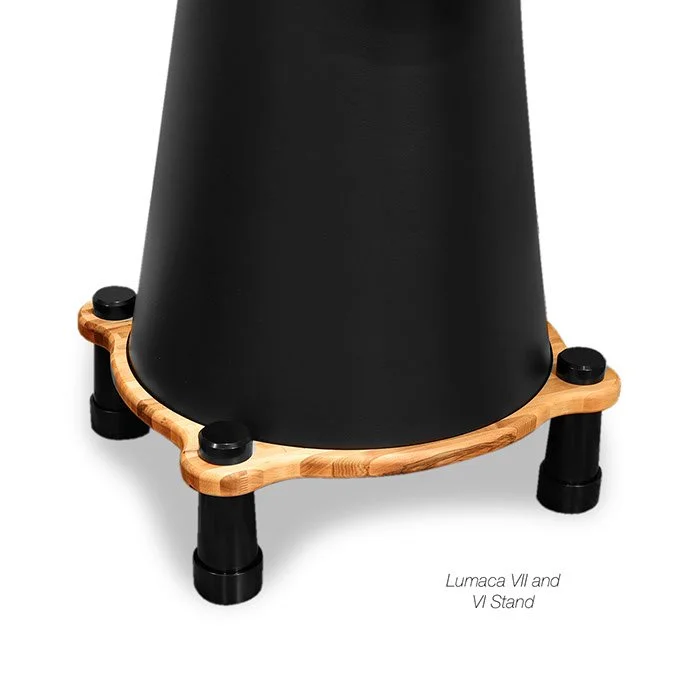
The Lumaca VII extends the tractrix expansion to 126”, allowing greater depth and weight to develop across the full spectrum. This added foundation reinforces the presentation as a whole, with the bass exiting 360 degrees from the base of the cabinet and integrating naturally into the room, introducing a stronger sense of scale and physical presence while maintaining the coherence and continuity inherent to the design.
Drivers
Lumaca is designed to work with a range of 8-inch wideband drivers, allowing the system to be tailored to individual preference while maintaining the integrity of the design. Both Voxativ and AER drivers are fully supported, each offering a distinct presentation within the same structural framework.
Driver selection influences tonal color, texture, and presentation style, but does not alter the underlying coherence or behavior of the system. A dedicated driver guide is available outlining the characteristics of each option and how they interact with the enclosure.